Sustainable Raw Materials: From corn starch (PLA) to high-end display models.

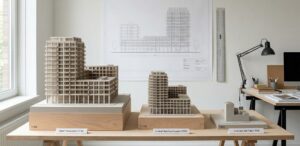
The future of model making is green: discover how we create high-precision architectural models from renewable cornstarch (PLA). This bioplastic perfectly combines ecological responsibility with premium aesthetics and technical precision.

The Basics: What exactly is PLA?

PLA stands for Polylactic Acid. Unlike traditional plastics, which are derived from petroleum, PLA is a bioplastic. The base material is renewable: it is obtained from the fermentation of plant-based sugars, usually derived from corn starch or sugar cane.

This means that we do not emit any toxic fumes during the printing process and that the material’s carbon footprint is significantly lower than that of conventional plastics.

From Corn Cob to High-End Model: The Process

It sounds almost too simple to be true: how does an agricultural product become a sleek, modern building on a scale model? The process involves three crucial stages:

Extraction and Polymerisation

The sugars from the maize are converted into lactic acid, which is then polymerised into small pellets. These pellets form the basis for the 3D printing filament.

Precision Printing

Using our advanced FDM printers, the PLA filament is heated and built up layer by layer with extreme precision. Thanks to the natural properties of PLA, the material is highly dimensionally stable, which is essential for the clean lines and angles characteristic of modern architecture.

The High-End Finish

This is where we make the difference. A sustainable model does not have to look ‘recycled’. By using advanced post-processing techniques – such as fine sanding and the use of water-based, eco-friendly lacquers – we transform the raw 3D print into a model with the appearance of high-quality plastic or even concrete and steel.

Why Choose Sustainable Raw Materials?

In addition to the environmental aspect, working with cornstarch-based PLA offers direct benefits for your project:

  • BREEAM & LEED Certification: The use of sustainable presentation materials can contribute to the overall environmental score of a project presentation.
  • Odourless and Safe: Ideal for models that remain on display for long periods in sales offices or public spaces; PLA is completely odourless and contains no harmful plasticisers.
  • Future-proof: At the end of a project’s life cycle (for example, after sale), the model can be composted in industrial facilities or easily recycled into new filament.

The Model of Tomorrow

The days of waste in model-making are over. By choosing 3D Models, you are choosing a partner who understands that innovation and respect for nature are inextricably linked. We prove that corn starch has the power to bring the most complex architectural visions to life. In addition, our supplier can provide almost all RAL colours, so you are always assured of the correct colours in your model.

Did you know? For an average project model, we use the yield from just a small corner of a cornfield. This way, we maximise the impact of your presentation and minimise the impact on the planet.

LinkedIn
Facebook
Meer blogs

3D ontruimingsplannen: Waarom een maquette levens kan redden

In noodsituaties is abstract denken lastig. Een fysieke 3D-maquette biedt instinctief ruimtelijk inzicht in vluchtwegen en risicozones. Dit tastbare hulpmiddel trapt personeel preventief en ondersteunt hulpdiensten cruciaal bij een crisis, wat de algemene veiligheidscultuur en zorgplicht versterkt.

Bekijk blog »

You might also be interested in this – take a look at our other blog posts

3D ontruimingsplannen: Waarom een maquette levens kan redden

In noodsituaties is abstract denken lastig. Een fysieke 3D-maquette biedt instinctief ruimtelijk inzicht in vluchtwegen en risicozones. Dit tastbare hulpmiddel trapt personeel preventief en ondersteunt hulpdiensten cruciaal bij een crisis, wat de algemene veiligheidscultuur en zorgplicht versterkt.

Bekijk blog »