Participation without resistance: How a scale model builds support in the neighbourhood

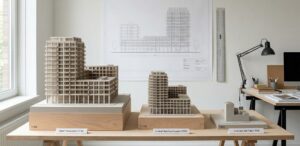
Physical 3D models help reduce resistance to urban projects by making abstract building plans tangible and transparent. This visual insight builds mutual trust, fosters dialogue and prevents costly legal delays by addressing uncertainties at an early stage.

Whether it’s the redevelopment of a station area, the construction of a new residential estate or the development of an apartment block: in urban planning in 2026, one thing is certain – the local community is watching closely. Resistance from local residents often stems not from unwillingness, but from uncertainty. “How tall will it really be?” and “Will I lose my sunlight?” are questions that are difficult to answer from a flat drawing.

At 3D Maquettes, we see that a physical model is the key to a smooth participation process. But how exactly does a 3D model prevent appeals?

The honesty of 3D: No ‘biased’ renders

Renders (digital images) are beautiful, but local residents sometimes mistrust them. After all, they are often created from the most favourable angle with perfect lighting. A physical model is ‘honest’. People can walk around it, crouch down to view the perspective from their own street and immediately grasp the proportions in relation to existing buildings. This transparency dispels the initial fear of the unknown.

Spatial understanding for non-professionals

Not everyone can read a construction drawing or a 2D floor plan. What is second nature to an architect is often an abstract jumble of lines to a local resident. A 3D model translates that abstraction into reality. When people see the physical form, they grasp the logic behind a design more quickly. This understanding is the first step towards acceptance.

Emotion and engagement: The ‘campfire effect’

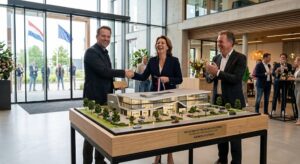
During a residents’ evening, a model acts like a campfire: it draws people in. Instead of a presenter standing in front of a group delivering a talk, a dialogue develops around the model. People point things out, ask questions and make suggestions. This shifts the dynamic from ‘us versus them’ to a joint conversation about the future of the neighbourhood.

Avoid costly legal delays

An objection procedure can bring a project to a standstill for months, or even years. The costs of such delays are many times higher than the investment in a professional model. By providing clarity in the early stages of participation with a model from 3D Maquettes, misunderstandings are cleared up immediately.

The result: A neighbourhood that feels heard and informed is less likely to lodge an objection.


How we assist with your participation process

When creating a participation model, we pay attention to specific details that are important to local residents:

  • Contextual accuracy: We render the existing surroundings in a neutral colour (e.g. white), so that the new design stands out clearly in contrast (e.g. in colour or with a wood-effect finish).
  • Modularity: Sometimes we create different interchangeable options so that residents can see on the spot the effect of a different roof shape or an additional green strip.
  • Ease of transport: Our models made from PLA or PETG are lightweight and robust, making them easy to move to different consultation venues or the town hall.

Make your vision a talking point

Do you want to take the step from ‘making plans’ to ‘realising plans’? A model is the most cost-effective investment in your communication strategy. It creates a sense of calm at the meeting table and enthusiasm in the neighbourhood.

Are you curious to know which type of model best suits your next residents’ evening? Please contact us. We’d be happy to advise you on the scale and level of detail required to present your project without resistance.

LinkedIn
Facebook
Meer blogs

3D ontruimingsplannen: Waarom een maquette levens kan redden

In noodsituaties is abstract denken lastig. Een fysieke 3D-maquette biedt instinctief ruimtelijk inzicht in vluchtwegen en risicozones. Dit tastbare hulpmiddel trapt personeel preventief en ondersteunt hulpdiensten cruciaal bij een crisis, wat de algemene veiligheidscultuur en zorgplicht versterkt.

Bekijk blog »

Ook interessant, bekijk andere blogs

3D ontruimingsplannen: Waarom een maquette levens kan redden

In noodsituaties is abstract denken lastig. Een fysieke 3D-maquette biedt instinctief ruimtelijk inzicht in vluchtwegen en risicozones. Dit tastbare hulpmiddel trapt personeel preventief en ondersteunt hulpdiensten cruciaal bij een crisis, wat de algemene veiligheidscultuur en zorgplicht versterkt.

Bekijk blog »