Creating a 3D model: how does it work?

From initial idea to physical masterpiece A 3D model is much more than a simple plastic scale model. It is the physical embodiment of a vision, a design, a dream or a gift.

From initial idea to physical masterpiece

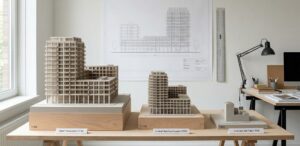
A 3D model is much more than a simple plastic scale model. It is the physical translation of a vision, a design, a dream or a gift. Whether it’s a complex architectural project, an urban development plan or a unique technical prototype: at 3D Maquettes, we transform digital data into tangible reality.

But how does that process actually work? In this blog, we’ll take you through every step of our meticulous workflow.

Step 1: The enquiry

It all starts with our interaction with you, the client. You let us know your requirements via our website or by contacting us directly. In this phase, we gather the essential details: What is the purpose of the model? What scale is required? What is the deadline?

Often, as a client, you’ll send us a digital file straight away (such as an STL, STEP or BIM file). Don’t have a file yet, just a good idea or a sketch on paper? No worries, we can still get started.

Step 2: Digital optimisation or design

As soon as we receive your enquiry, our experts get to work on the data. We carefully check the file you’ve provided for ‘printability’. A digital design isn’t always immediately suitable for the physical world; walls may be too thin or details may be lost at the chosen scale.

If there is no digital file yet, we will create a technical design for you. We translate your ideas into a precise 3D drawing. In both cases, we provide feedback on our findings. This step is very important, because an architect does not design a building to be 3D-printed.

Step 3: The strategic choice of material

No two projects are the same. That is why, for each commission, we select the material that best suits the desired look and functionality.

  • Our standard material is PLA (Polylactic Acid). This is a bio-based printing material that is industrially biodegradable. We can order this in any RAL colour.
  • PETG (Polyethylene Terephthalate): When the model needs to be extra strong or resistant to higher temperatures (for example, for presentations in direct sunlight or during intensive transport). PETG combines the printability of PLA with the strength of industrial plastics, making it perfect for functional parts in a model.

The choice of material also determines which 3D printer we use to guarantee the highest quality.

Step 4: Production on the printer

Now the magic begins: the actual 3D printing. Our printers build the model layer by layer. This process can take anywhere from a few hours to several days, depending on the complexity and size of the project. Throughout this process, we keep a close eye on the machines.

Step 5: Finishing and assembly

Once the printer has finished, the model is not yet ready for the boardroom. First comes the post-processing phase. This is usually the most time-consuming stage. We remove any support structures and thoroughly clean the parts. If the model consists of multiple printed parts, these are assembled with the utmost precision during this phase. If you would like a protective cover for the model, we can also arrange this for you during this phase.

Step 6: Our quality guarantee

At 3D Maquettes, we stand for perfection. During assembly, we carry out a strict quality control check. Is a detail not sharp enough? Is a print layer not perfectly bonded? Then we won’t settle for ‘good enough’. If a print has failed or does not meet our standards, the project goes straight back to the printer. We keep printing until the result matches the approved design exactly.

Step 7: Packing and dispatch or delivery

A model is a valuable and sometimes fragile object. That is why we take great care with the final step: transport. The model is professionally packed with protective materials to absorb shocks and vibrations. If desired, we can also deliver the model in person; this is often a safer solution, particularly for large models. The package is then dispatched to ensure it arrives safely and on time at your location, ready to impress your audience.

Your project in 3D?

Now that you know how much care and expertise goes into every square centimetre of our models, you may be curious to find out what we can do for you.

Do you have a design ready or are you walking around with a unique idea? Contact us today for a no-obligation consultation or a bespoke quote. Together, we’ll bring your vision to life!

LinkedIn
Facebook
Meer blogs

3D evacuation plans: Why a model can save lives

3D evacuation plans: Why a model can save lives The human brain is programmed to think in three dimensions. In a calm environment, most people have no trouble translating a flat drawing into reality. However, as soon as panic or time pressure sets in, our capacity for abstract thinking diminishes.

Bekijk blog »

You might also be interested in this – take a look at our other blog posts

3D evacuation plans: Why a model can save lives

3D evacuation plans: Why a model can save lives The human brain is programmed to think in three dimensions. In a calm environment, most people have no trouble translating a flat drawing into reality. However, as soon as panic or time pressure sets in, our capacity for abstract thinking diminishes.

Bekijk blog »