3D evacuation plans: Why a model can save lives

3D evacuation plans: Why a model can save lives

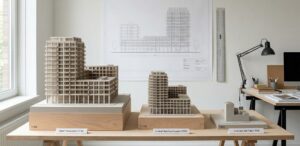
The human brain is programmed to think in three dimensions. In a calm environment, most people have no trouble translating a flat drawing into reality. However, as soon as panic or time pressure sets in, our capacity for abstract thinking diminishes. A 2D floor plan then suddenly becomes a maze of lines. A 3D-printed model at the main entrance or reception provides immediate, instinctive spatial awareness.

Spatial awareness for staff and emergency services

A model is an indispensable tool for both in-house staff (emergency response team) and the fire brigade rushing in. Whereas a stack of paper has information scattered across different floors, a model shows the vertical structure of a building.

  • Escape routes at a glance: By physically marking escape routes, staff immediately understand where they need to go, without first having to ‘rotate’ the map in their minds.
  • Fire compartments: We can print different sections of the building in colour (for example, using coloured PLA). This allows the fire brigade to see at a glance where the fire separations are and where the greatest risks lie.
  • Crucial points: The locations of fire extinguishers, gas shut-off valves and electrical switchboards are marked physically on the model.

Strategic placement in the main lobby

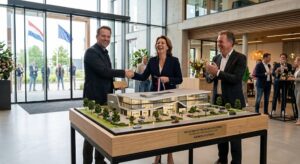
A safety model serves not only during a crisis but also as a preventive tool. By placing a model in the main lobby or at reception, visitors and staff are trained subconsciously. Every time they walk past the model, they commit the building’s layout to memory. This significantly enhances the overall safety culture within an organisation.

Durable materials for intensive use

For safety models, we make strategic use of our three core materials:

  • PETG for robustness: As these models are often placed in public areas where they may be touched, impact-resistant PETG is ideal for the base and walls of the model.
  • PLA for colour coding: We use PLA to create sharp colour contrasts to clearly distinguish different safety zones or compartments from one another.

A new market: Emergency response and prevention budgets

The beauty of this concept is that it is often separate from traditional construction or marketing budgets. Fire safety and evacuation fall under the headings of emergency response, prevention and facilities management. For organisations that take their duty of care seriously, a 3D safety model is a one-off investment that doubles the effectiveness of their safety plan.

Mapping your building’s safety?

Visualizing fire safety is a powerful way to reduce risks and build support for safety procedures. At 3D Maquettes, we enjoy collaborating on how we can translate your complex building into a clear, functional, and life-saving model.

Would you like to know how we can convert your current evacuation plan into a 3D safety model in PLA or PETG? Contact us via the contact page or request a no-obligation quote for a consultation. We are happy to help you make safety within your organization tangible.

LinkedIn
Facebook
More blogs

3D ontruimingsplannen: Waarom een maquette levens kan redden

In noodsituaties is abstract denken lastig. Een fysieke 3D-maquette biedt instinctief ruimtelijk inzicht in vluchtwegen en risicozones. Dit tastbare hulpmiddel trapt personeel preventief en ondersteunt hulpdiensten cruciaal bij een crisis, wat de algemene veiligheidscultuur en zorgplicht versterkt.

View blog

Also interesting, check out other blogs

3D ontruimingsplannen: Waarom een maquette levens kan redden

In noodsituaties is abstract denken lastig. Een fysieke 3D-maquette biedt instinctief ruimtelijk inzicht in vluchtwegen en risicozones. Dit tastbare hulpmiddel trapt personeel preventief en ondersteunt hulpdiensten cruciaal bij een crisis, wat de algemene veiligheidscultuur en zorgplicht versterkt.

View blog »